
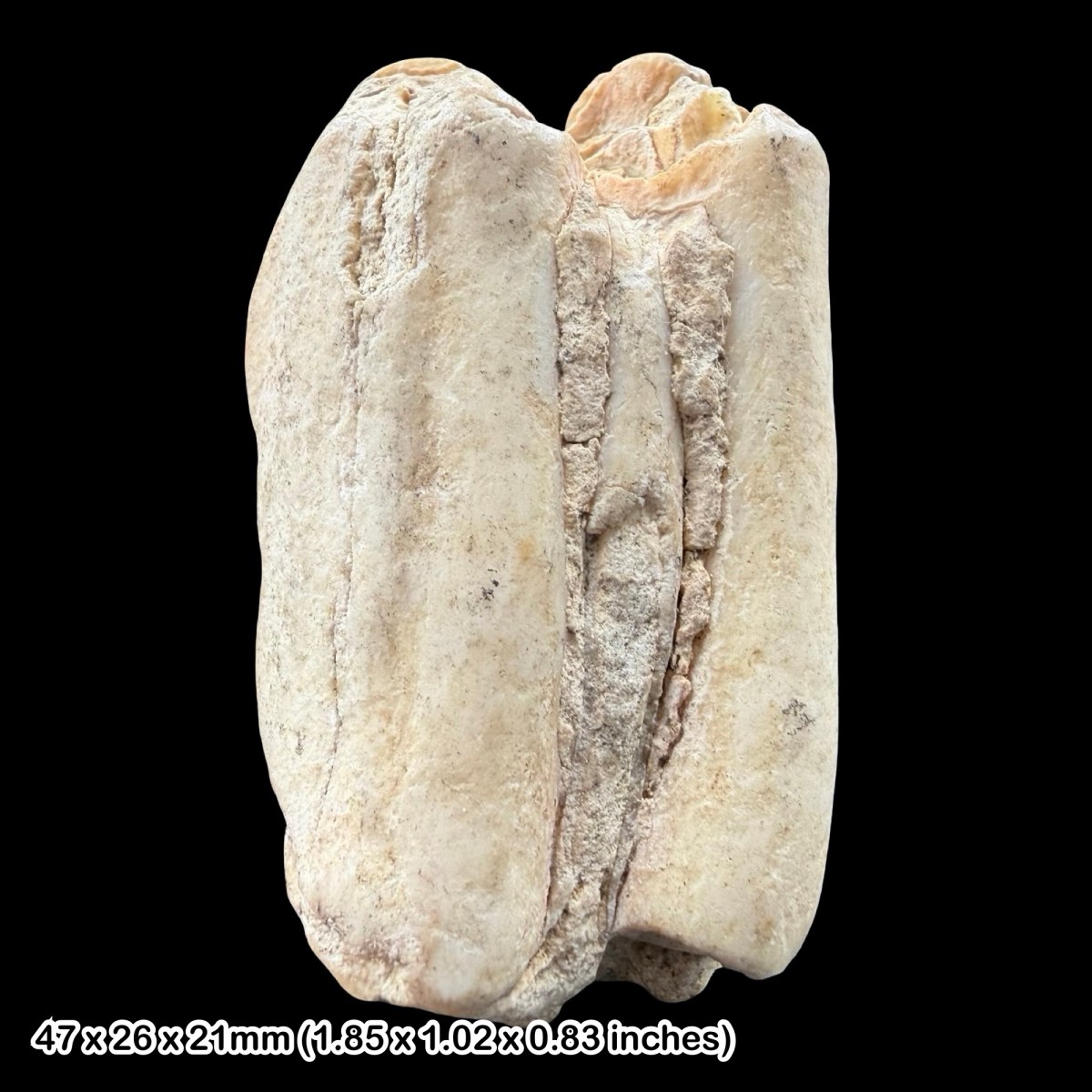
Aurochs Bos primigenius Fossil Upper Molar Tooth Pleistocene Wales UK Specimen – Wild Ox Fossil Tooth Minchin Hole Cave
$ 37.80
Description Bos primigenius Aurochs Upper Molar Tooth Fossil from Wales This genuine Bos primigenius upper molar tooth fossil, belonging to the prehistoric Aurochs or Wild Ox, originates from Minchin Hole Cave on the Gower Peninsula, West Glamorgan, Wales, United Kingdom. The specimen dates to the Pleistocene Epoch, a geological period spanning roughly 2.58 million to 11,700 years ago, known for dramatic climatic fluctuations and the presence of numerous large Ice Age mammals. The Aurochs was the wild ancestor of modern domestic cattle and was one of the largest herbivores inhabiting prehistoric Europe. Fossil remains from cave deposits such as Minchin Hole provide valuable evidence of the animals that once roamed the landscapes of Ice Age Britain. Teeth are among the most durable skeletal elements and frequently survive long after other bones have decayed, making them particularly valuable fossils for studying extinct mammals. This fossil preserves an upper molar tooth, a specialised grinding tooth that formed part of the herbivore’s chewing apparatus. Geological and Archaeological Context of Minchin Hole Cave Minchin Hole Cave is located on the Gower Peninsula in South Wales, a region known for its rich Pleistocene fossil deposits. The cave formed within Carboniferous limestone, where natural processes of dissolution created underground chambers and passages. During the Pleistocene, caves such as Minchin Hole acted as natural traps and shelters. Sediments, animal remains, and organic material accumulated inside the cave over thousands of years. These deposits often include the remains of mammals transported by predators, scavengers, or natural environmental processes. Pleistocene cave deposits across Britain have yielded fossils of numerous Ice Age animals including: Aurochs (Bos primigenius) Woolly mammoths Cave hyenas Woolly rhinoceroses Red deer and other herbivores The fossil-bearing sediments in Minchin Hole represent a window into the ecosystems of prehistoric Britain during the later phases of the Ice Age. Classification and Biology of Bos primigenius The Aurochs belongs to the phylum Chordata, class Mammalia, order Artiodactyla, and family Bovidae. This group includes modern cattle, bison, buffalo, and antelope. Bos primigenius was a large wild bovine species that once ranged across Europe, Asia, and North Africa. These animals were powerful herbivores adapted to grazing and browsing across open grasslands, woodland margins, and river valleys. The species is considered the direct ancestor of modern domestic cattle (Bos taurus). Early humans domesticated Aurochs thousands of years ago, leading to the development of numerous cattle breeds known today. Aurochs survived in parts of Europe until relatively recent historical times, with the last known individuals recorded in Poland during the seventeenth century. Morphology and Structure of the Upper Molar Molar teeth of herbivorous mammals are highly specialised structures designed to grind plant material. The Aurochs possessed large, durable molars capable of processing tough vegetation such as grasses and leaves. Key characteristics of Aurochs molar teeth include: Broad grinding surface Complex enamel ridges forming distinctive patterns Thick enamel and dentine layers Large root system anchoring the tooth within the jaw The ridged enamel pattern visible on the chewing surface forms an effective grinding mechanism that breaks down plant fibres during chewing. These teeth are particularly robust and fossilise well, which is why molars are among the most commonly preserved elements of large prehistoric mammals. Pleistocene Environment of Ice Age Britain During the Pleistocene Epoch, Britain experienced repeated cycles of glacial and interglacial climate conditions. These environmental shifts shaped the landscapes and ecosystems that supported large mammals such as the Aurochs. In warmer interglacial periods, Britain hosted grasslands, forests, and river valleys that provided ideal habitats for large grazing animals. Aurochs lived alongside a variety of other mammals including deer, horses, bison, and predators such as wolves and cave hyenas. The fossil record preserved in cave deposits like Minchin Hole provides evidence of these complex ecosystems and the animals that inhabited prehistoric Britain during the Ice Age. Authentic Fossil Specimen This fossil is a genuine Bos primigenius upper molar tooth from the Pleistocene deposits of Minchin Hole Cave, Gower, Wales, UK. The specimen has been carefully selected for quality and display appeal. The photograph shows the actual fossil specimen you will receive, allowing collectors to clearly observe the preserved tooth structure and natural fossilisation. Full sizing please see photo. Certificate of Authenticity This fossil includes a Certificate of Authenticity lifetime guarantee generic card, confirming that the specimen is a genuine natural fossil. Aurochs fossils from British Pleistocene cave deposits are historically and scientifically important specimens. As the wild ancestor of modern cattle, Bos primigenius represents a significant part of the evolutionary history of domesticated animals and offers a fascinating glimpse into the Ice Age fauna that once inhabited the landscapes of Britain.
Related products
-
Very Rare Echioceras Ammonite Fossil Lower Lias Jurassic Bristol Somerset UK – Genuine British Ammonite with Hand Signed CertificateEnquire Now
-
Carcharocles angustidens Shark Tooth Fossil Oligocene South Carolina USA Ashley Formation Giant Megalodon Ancestor Tooth Specimen with COAEnquire Now
-
Pecopteris Fossil Fern Carboniferous Coal Measures Wigan Lancashire UK Plant Fossil – Genuine British Fossil with COAEnquire Now
-
Arnioceras Ammonite Fossil Polished Jurassic Yorkshire UK Whitby Mudstone Genuine Sinemurian Ammonite Holderness Coast Specimen with COAEnquire Now