
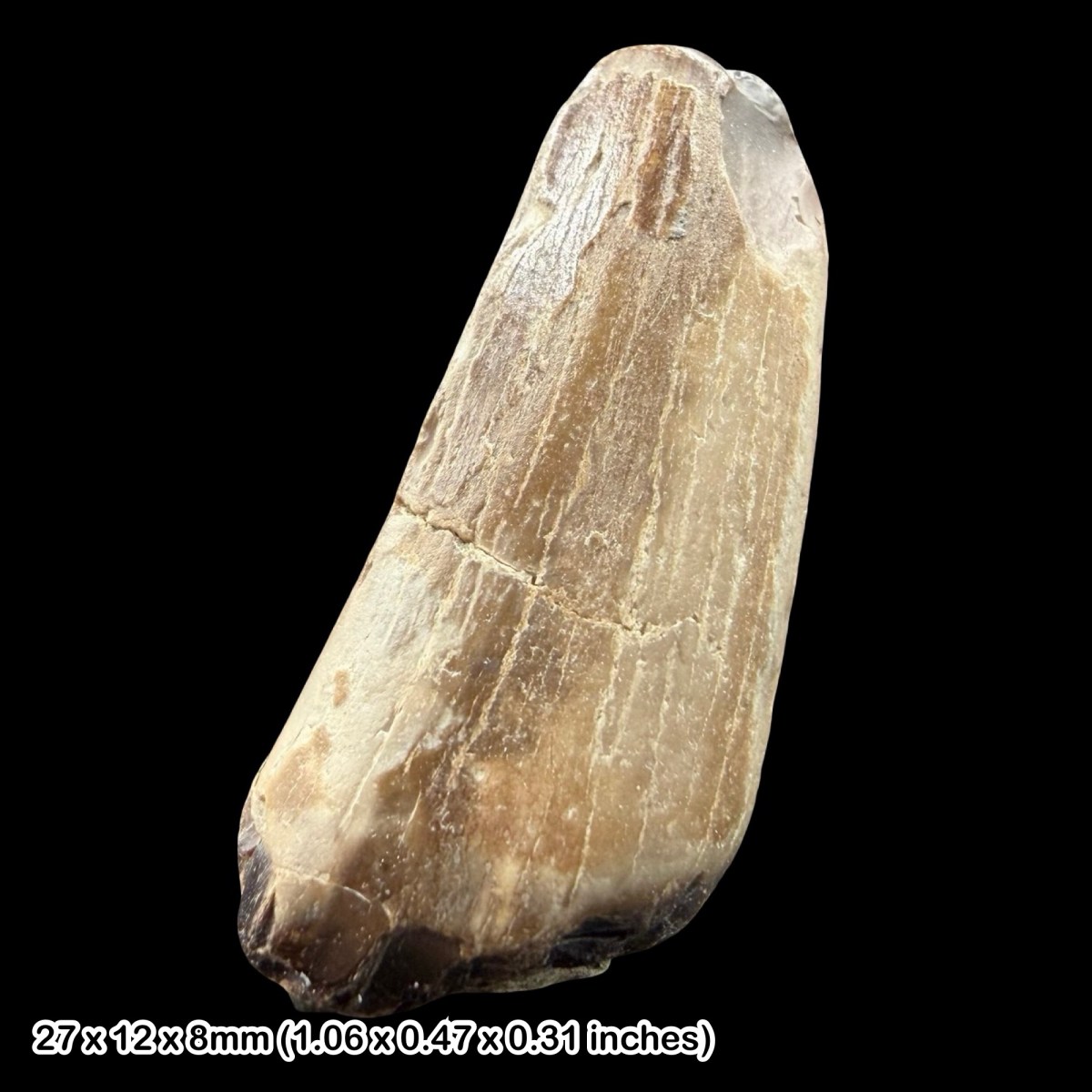
Rare Dakosaurus Marine Crocodile Tooth Fossil Jurassic Kimmeridge Clay Dorset UK – Dakosaurus sp Fossil Tooth Fleet Weymouth Kimmeridgian
$ 69.85
Description Rare Dakosaurus Marine Crocodile Tooth Fossil from Dorset This impressive Dakosaurus sp. marine crocodile tooth fossil originates from the famous Kimmeridge Clay Formation near Fleet, Weymouth in Dorset, United Kingdom. Dating to the Upper Jurassic Period, Kimmeridgian Stage (approximately 157–152 million years ago), this fossil represents one of the formidable marine predators that inhabited the warm epicontinental seas covering southern Britain during the Late Jurassic. Dakosaurus was a member of the Metriorhynchidae, a remarkable group of marine-adapted crocodilians that evolved fully pelagic lifestyles. Unlike modern crocodiles, metriorhynchids possessed paddle-like limbs, streamlined bodies, and a shark-like tail fin, allowing them to thrive as powerful predators in open marine environments. Fossil teeth from these animals are highly collectible due to their distinctive shape and association with one of the most famous Jurassic marine deposits in Europe. This specimen is preserved as a genuine tooth fossil from the classic Kimmeridge Clay coastal exposures, a formation renowned for yielding marine reptile fossils including ichthyosaurs, plesiosaurs, and marine crocodiles. Geological Formation and Stratigraphy The fossil originates from the Kimmeridge Clay Formation, a thick sequence of organic-rich marine mudstones deposited across southern England during the Late Jurassic. The formation is named after the village of Kimmeridge in Dorset, where some of the best exposures occur along the Jurassic Coast. These sediments accumulated in a shallow offshore marine basin, where fine clay and organic material settled slowly onto the seafloor. Periodic low-oxygen conditions in the seabed sediments helped preserve vertebrate remains such as teeth, bones, and occasionally complete skeletons. The Kimmeridge Clay is globally important for both paleontological discoveries and petroleum geology, as the organic-rich sediments later became important hydrocarbon source rocks. Dakosaurus and Marine Crocodile Evolution Dakosaurus belongs to the order Crocodyliformes, within the family Metriorhynchidae, a lineage of crocodilians that adapted to life entirely within marine ecosystems during the Jurassic and Early Cretaceous. Unlike many other marine crocodiles with long, slender snouts suited for catching fish, Dakosaurus possessed a shorter, robust skull and large serrated teeth, indicating a more powerful bite capable of tackling large prey. These animals are often considered the apex predators of their marine ecosystems, occupying a role similar to that of large predatory sharks or marine reptiles. The genus Dakosaurus was first described in the nineteenth century by Friedrich August Quenstedt, who recognised the distinctive cutting teeth and skull characteristics of this powerful predator. Tooth Morphology and Notable Features Dakosaurus teeth are among the most distinctive marine reptile fossils from the Jurassic seas. They are easily recognised by several characteristic features: Robust conical crown structure Sharp cutting edges with serrated margins (ziphodont dentition) Thick enamel adapted for powerful biting Root structure used to anchor the tooth within the jaw These adaptations suggest that Dakosaurus was capable of tearing flesh from large marine prey, including fish, cephalopods, and potentially other marine reptiles. The serrated edges functioned in a similar way to those of large theropod dinosaurs, making these teeth highly specialised cutting tools. Jurassic Marine Environment of the Kimmeridge Clay Sea During the Kimmeridgian Stage of the Late Jurassic, southern England was submerged beneath a warm shallow sea that formed part of a vast European epicontinental basin. The waters were rich in marine life, supporting a diverse ecosystem that included ammonites, belemnites, fish, sharks, and large marine reptiles. Dakosaurus inhabited these waters alongside ichthyosaurs, plesiosaurs, pliosaurs, and other marine crocodilians, forming part of a complex marine food web dominated by powerful predators. The sediments that would become the Kimmeridge Clay slowly accumulated in deeper offshore environments, where fine clay deposits helped preserve vertebrate fossils such as this marine crocodile tooth. Authentic Fossil Specimen This fossil is a genuine Dakosaurus marine crocodile tooth from the Kimmeridge Clay Formation of Dorset, UK. The specimen has been carefully selected for quality and display appeal, preserving the natural structure and form of the tooth. The photographs show the actual fossil specimen you will receive, ensuring transparency and authenticity for collectors. Full sizing please see photo. Certificate of Authenticity This fossil includes a Certificate of Authenticity lifetime guarantee generic card, confirming that the specimen is a genuine natural fossil. Dakosaurus fossils from the Dorset Jurassic Coast are highly prized among collectors due to their connection with one of the most famous fossil-bearing formations in the world. This marine crocodile tooth offers a striking and scientifically important piece of the ancient Jurassic seas that once covered southern Britain.
Related products
-
Carcharocles angustidens Shark Tooth Fossil Oligocene South Carolina USA Ashley Formation Giant Megalodon Ancestor Tooth Specimen with COAEnquire Now
-
Pecopteris Fossil Fern Carboniferous Coal Measures Wigan Lancashire UK Plant Fossil – Genuine British Fossil with COAEnquire Now
-
Arnioceras Ammonite Fossil Polished Jurassic Yorkshire UK Whitby Mudstone Genuine Sinemurian Ammonite Holderness Coast Specimen with COAEnquire Now
-
Very Rare Echioceras Ammonite Fossil Lower Lias Jurassic Bristol Somerset UK – Genuine British Ammonite with Hand Signed CertificateEnquire Now