
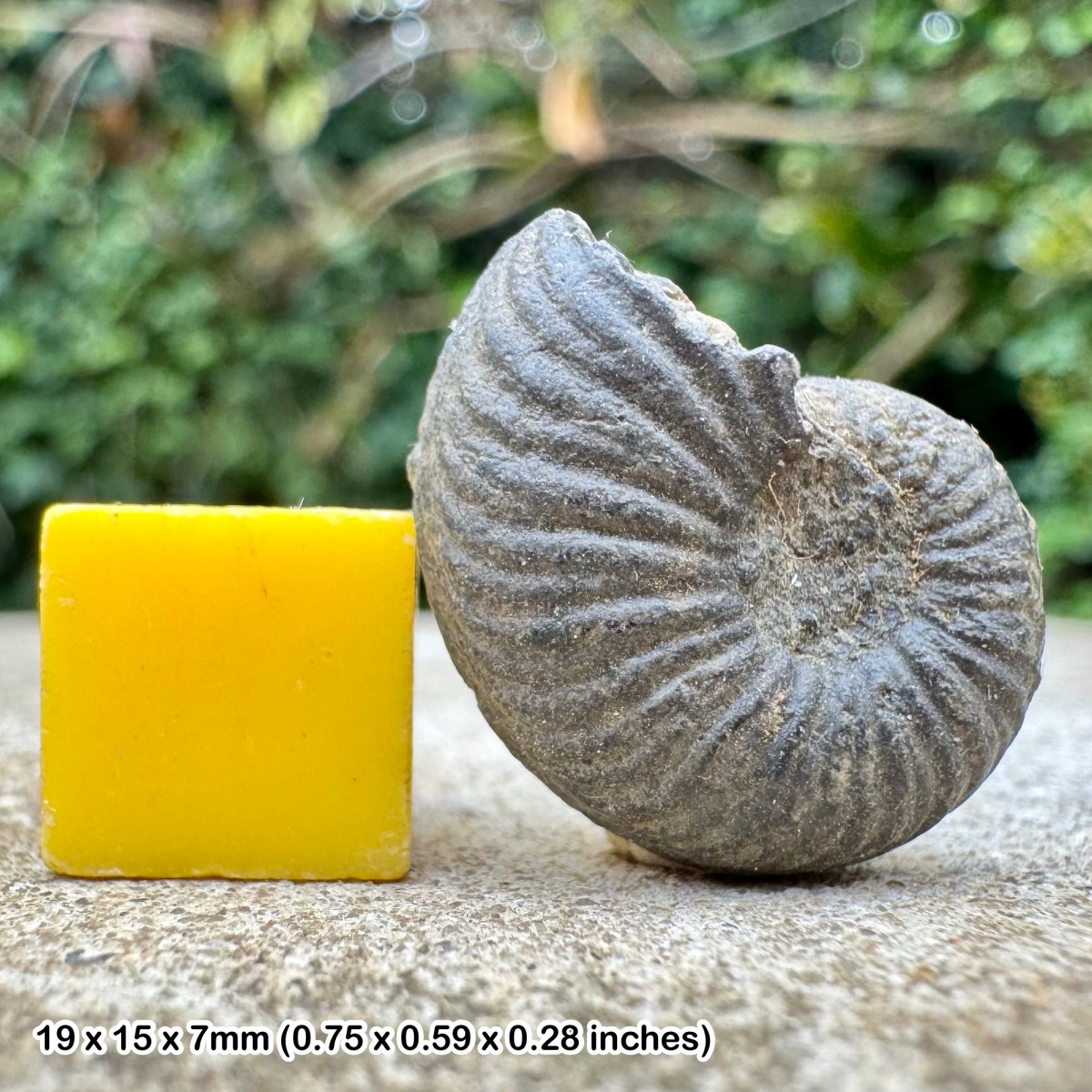
RARE Triassic Ammonite Fossil – CERATITES NEVADENSIS – Middle Triassic – USA
$ 16.20
Description This listing showcases a RARE and authentic Triassic ammonite fossil of the species Ceratites nevadensis, originating from the Middle Triassic strata of the western United States. This distinctive fossil is a prime example of ceratitid ammonoids, an important evolutionary group of cephalopods from the Triassic period. Fossil Type & Species: Type: Fossilised Ammonite (extinct marine mollusc) Species: Ceratites nevadensis Geological Context: Era: Mesozoic Period: Triassic Stage: Likely Anisian or Ladinian (Middle Triassic) Locality: USA (precise locality data limited; Nevada region likely based on species name) Depositional Environment: Shallow marine shelf, typically carbonate-rich environments with episodic influxes of siliciclastics Morphological Features: Evolute shell structure with broad whorls and a low keel Characteristic ceratitic suture lines with rounded lobes and saddles Medium to large size ammonite with finely ribbed shell surface Scientific Notes: Ceratites nevadensis is an important ammonoid species used in biostratigraphic correlation of Middle Triassic marine sequences in the western USA. The genus Ceratites is renowned for its transitional suture patterns, bridging earlier goniatites and later ammonites. This fossil reflects marine evolutionary recovery and radiation following the end-Permian mass extinction. Taxonomy: Order: Ceratitida Superfamily: Ceratitoidea Family: Ceratitidae Formally Described By: Commonly referenced in regional Middle Triassic ammonoid faunal studies; detailed taxonomic authority may vary depending on reference Authenticity & Display: All of our fossils are 100% Genuine Specimens and come with a Certificate of Authenticity. The fossil shown in the photograph is the exact piece you will receive. Please refer to the image for exact sizing – Scale cube = 1cm. An exceptional piece for collectors and enthusiasts of Mesozoic marine life, Triassic ammonoids, or key evolutionary transitions within cephalopods.